How to Choose a Custom Sportswear Manufacturer for Your Brand or Club
Choosing a custom sportswear manufacturer is not just a search for a good-looking jersey at an attractive price. For a club, it affects player fit, roster accuracy, and season planning. For a brand, it affects product consistency and whether the next run still matches the first.
Ask not only “Who can make this design?” but “Who can show us a reliable path from our brief to a repeatable delivery?”
Start with your buying route
First, decide whether you need a customized existing product or a product-development partner. A club replacing a known match kit may need a dependable base garment and a clear roster process. A new brand may need a broader route: fit block, fabric, construction, trim, decoration, labels, packaging, and a sample.
Write a one-page brief before requesting quotes. Include the sport, product types, wearer, size range, quantity, artwork status, decoration needs, arrival date, and packaging or labeling requirements.
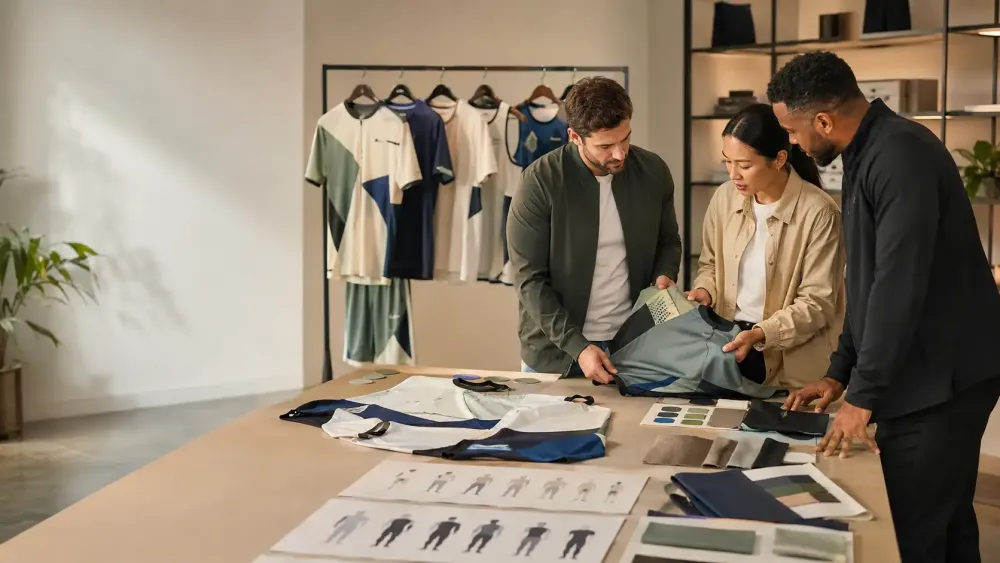
Tonton Sportswear’s published workflow moves from sport and product selection through design, sizing, fabric, application technique, and final approval. A supplier should explain those decisions, not only the picture.
Check sport-specific understanding, not just catalog breadth
A broad product catalog can be helpful, especially when a club or brand needs multiple sports. It is not enough on its own. Ask how the chosen sport changes construction and use.
For soccer, that may mean breathable panel placement, number visibility, goalkeeper requirements, and the difference between match and training garments. For basketball, focus on arm mobility, neck and armhole finish, and the relationship between jersey and short. Contact, layering, protection, closures, and abrasion change the brief in baseball, hockey, wrestling, and American football.
The answer you want is specific. “We can make anything” is less useful than a manufacturer explaining which fabric, fit, seam, or decoration choice should be reviewed for your actual product.
Ask for a sample and specification process you can audit
A digital mockup is important, but it does not prove the final garment. It cannot fully confirm fabric feel, fit, panel alignment, seam behavior, or the way colors appear on the selected material. Before a first bulk order, ask what the supplier records and what you must approve.
Your sample checklist should cover:
fabric and intended use;
measurement chart, tolerances, and size grading;
color references and panel-by-panel placement;
artwork version and decoration method;
seam, binding, collar, and trim details;
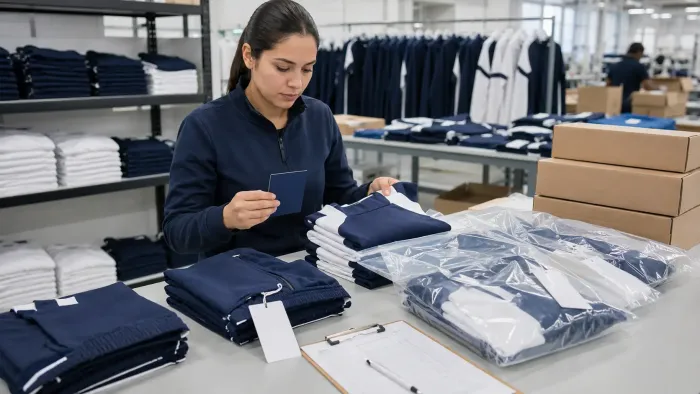
labels, folding, packaging, and carton requirements; and
the exact written approval that releases production.
Tonton Sportswear recommends reviewing a physical sample when fit is uncertain and states that manufacturing starts only after final written approval. For a buyer, the practical lesson is universal: retain the approved sample notes and the production file. They are the reference for the next run.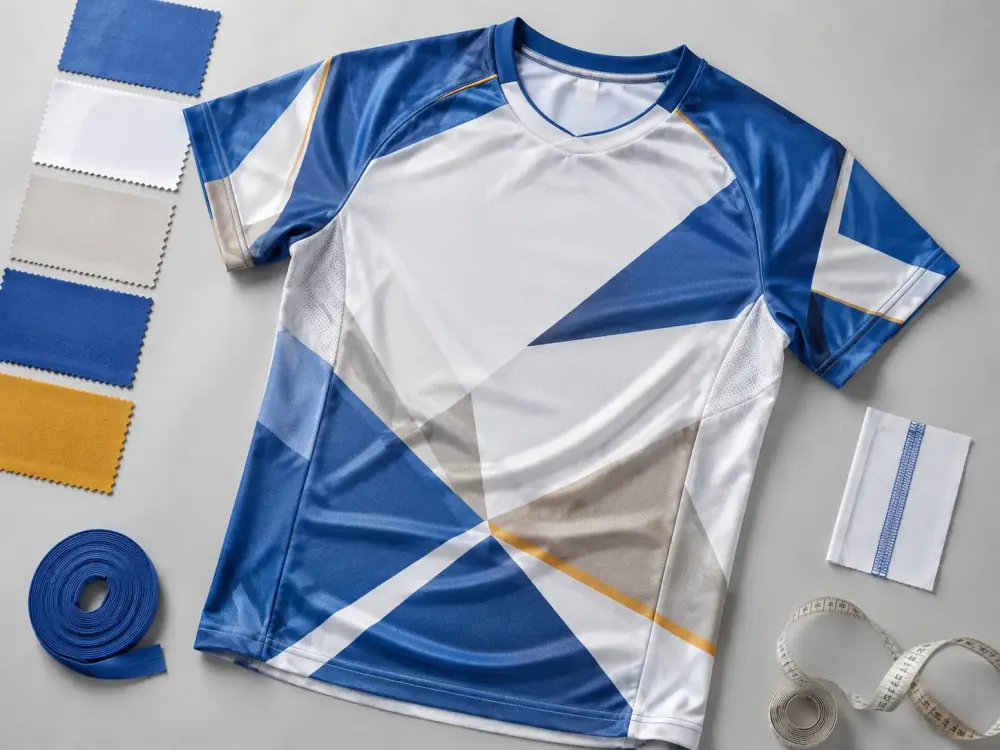
Look for order control, especially when details multiply
The real test of a manufacturer often arrives when an order includes many sizes, player names, numbers, staff pieces, or delivery locations. Ask how order information travels from approved artwork to production and packing. Who checks the roster? How are late changes handled?
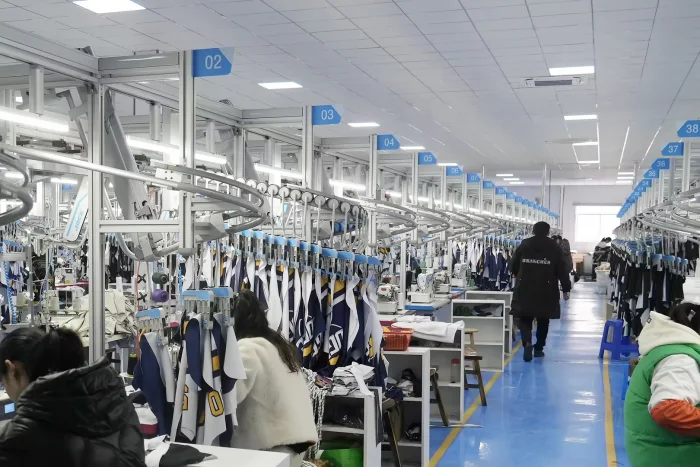
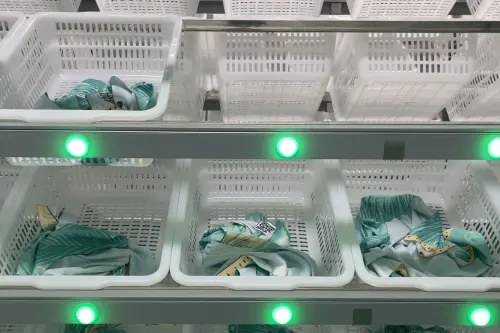
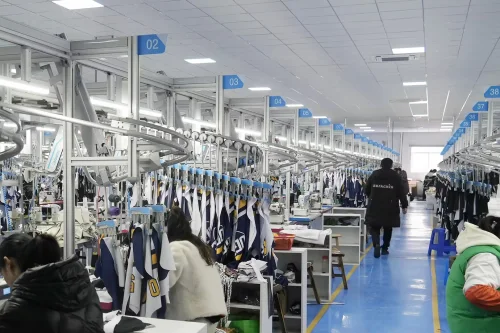
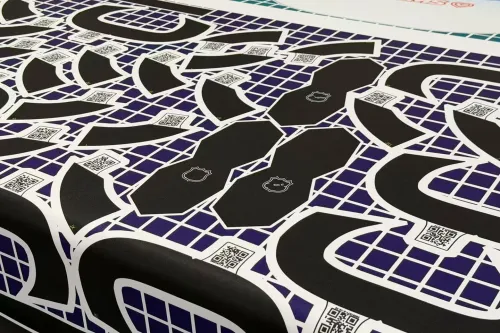
Tonton Sportswear describes QR-based tracking and sorting in its manufacturing materials. The useful criterion is whether the supplier can describe a disciplined process: a final roster, version control, an order identifier, inspection checkpoint, and packing-list method.
Across Tonton’s 22 years of manufacturing and exporting teamwear, many expensive avoidable errors begin as tiny information gaps: an outdated crest file, a changed number list, a missing size, or a color reference that was never formally approved. A good system makes these issues visible before they become finished garments.
Compare quotes by scope, not only by unit price
Two quotes can appear similar while covering very different work. Compare the garment specification, decoration method, artwork preparation, sampling, labeling, packaging, quality checks, packing, and shipping terms. Confirm what is included, what needs separate approval, and what changes the price.
For clubs, clarify whether the order includes matchwear only or also training, staff, warm-up, and supporter pieces. For brands and retailers, clarify labels, packaging, color continuity, and retained artwork records. Tonton’s retailer and wholesaler solution presents OEM/ODM, labeling, packaging, and asset archiving; put those items into the quote comparison rather than treating them as assumptions.
Separate the production clock from the arrival date
An event, launch, or first match creates an arrival deadline. Production is only one part of reaching it. Build backward for briefing, artwork correction, sample approval, production, inspection, packing, freight, customs where relevant, receiving, and a final check.
Do not treat an advertised lead time as a substitute for a plan. Tonton’s site publishes different timing statements by page and product context, which is exactly why a buyer should confirm the current project-specific schedule. The stronger manufacturer conversation identifies dependencies early—particularly the final approval point and any information still missing from the brief.
Choose the partner that makes reordering easier
A successful first order should produce a usable reorder file. Keep the approved artwork, color references, measurement chart, fabric and trim details, decoration map, sample comments, roster convention, packing instructions, and shipment record. This protects both a club adding new players and a brand replenishing a proven style.
Before choosing a supplier, ask how those records are archived and how a repeat order is reconfirmed. Tonton Sportswear’s club and retailer solutions describe long-term design archiving and reorder support. In practice, the buyer should still confirm what is stored, how versions are named, and which variables must be re-approved before the next run.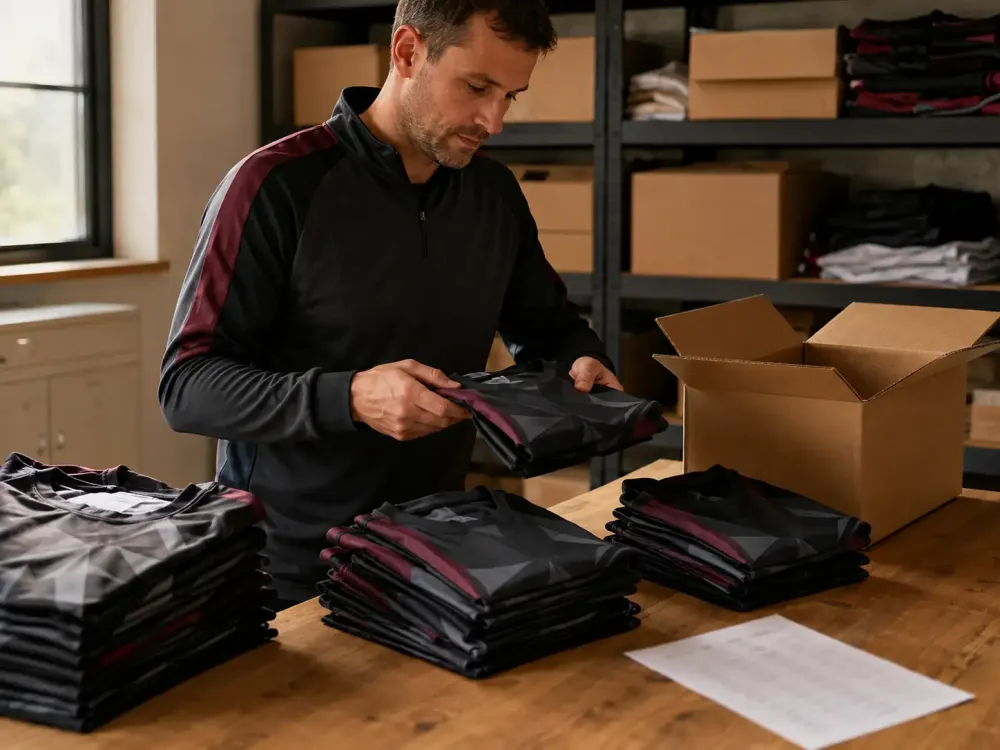
For a club or branded teamwear program, you can share your teamwear brief with Tonton Sportswear.
Conclusion: buy a process, not a promise
The right manufacturer does more than accept artwork and make a garment. It helps turn a requirement into a controlled product: a clear brief, reviewed sample, accurate order data, realistic delivery plan, and record for the next order.
Choose the partner that gives direct, sport-specific answers and can show where approvals happen.
Frequently Asked Questions About Choosing a Custom Sportswear Manufacturer
1. What should I send to a custom sportswear manufacturer for the first quote?
Send the sport, product types, quantity range, size range, artwork, color references, decoration requirements, expected arrival date, and any label or packaging needs. A concise brief makes quote comparisons more accurate.
2. Is a digital mockup enough to approve custom sportswear?
No. A mockup confirms visual direction, while a sample and written specification help confirm fit, fabric, construction, color, and decoration placement. Use the approved production file as the final reference.
3. How can a club avoid name, number, and size mistakes?
Use one final, version-controlled roster and agree how changes are handled after approval. Ask the manufacturer how roster information is checked through production and packing.
4. What should a private-label sportswear brand save for a reorder?
Keep approved artwork, color references, measurements, materials, trim details, decoration map, sample notes, labels, packaging instructions, and shipment records. Reconfirm any current commercial or logistics variables before placing the repeat order.
5. Should a club use the same manufacturer for matchwear and training apparel?
It can simplify color continuity, ordering, and reorders, provided the manufacturer understands the different product requirements. Review match, training, staff, and outerwear pieces separately rather than assuming one construction suits all uses.